The Iterative Five
The Friday Five: Vol. 1, No. 2

Week Two • Spring • Year One
Each Friday, I publish The Friday Five, a weekly ledger drawn from the shop floor, the windshield, and the workbench.
The structure borrows its language from the old farmer’s almanacs, those annual guides that combined observation, wisdom, tools, and seasonal preparation in one place.
Proverb
“Life is the best writer. Sometimes you have to let life show you a little bit of what that means.”
— Cameron Crowe
A useful reminder for anyone inclined to overwork the outline. Preparation matters, but some of the most important turns in a story arrive only after you allow the world to write a few lines of its own.
Tool
P209 Pentel Mechanical Pencil (.9mm, yellow)
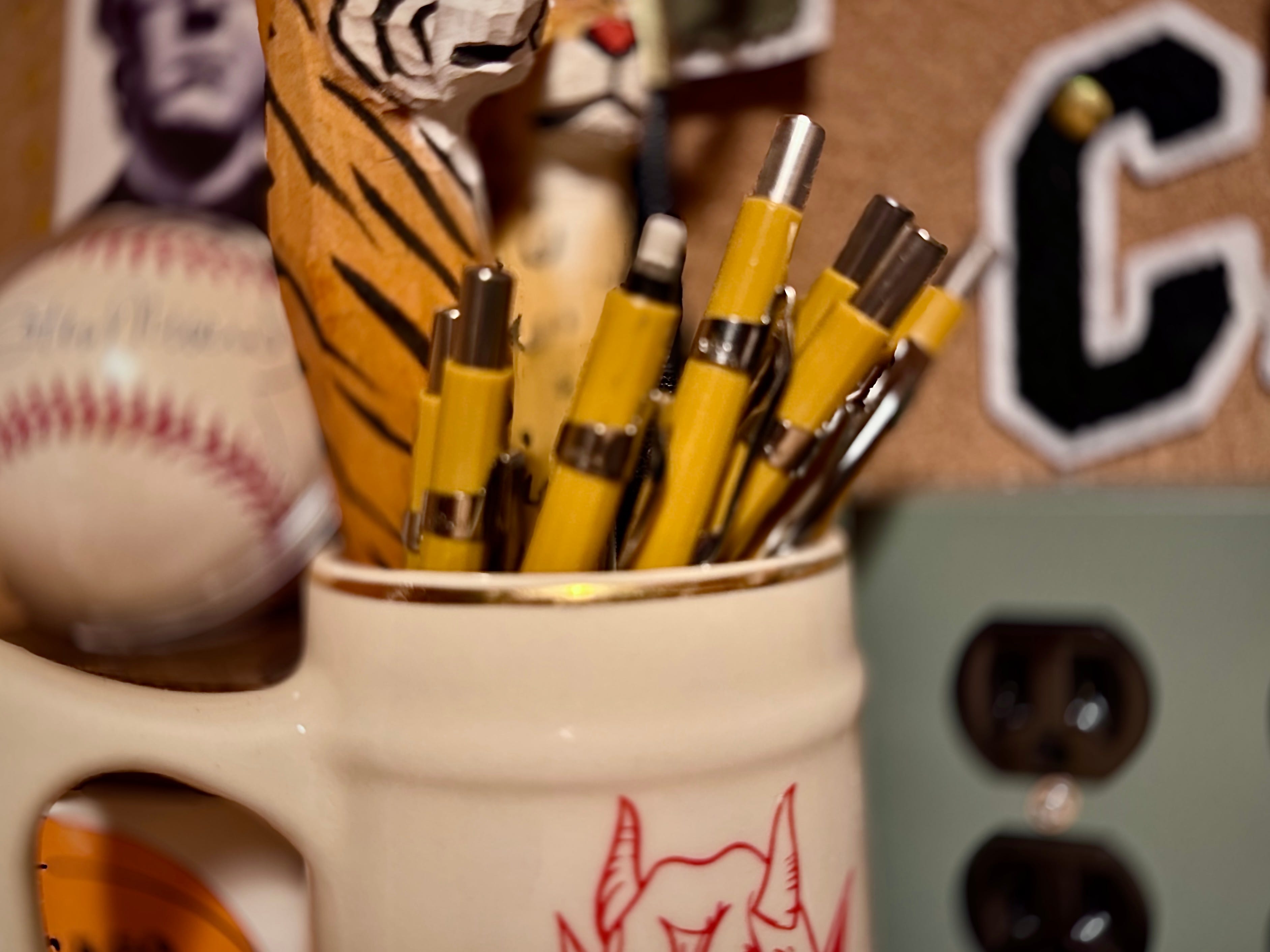
In their permanent spot on my desk, the Red Devil Stein
My pencil cup is perpetually stocked with a few of the yellow Pentel .9 mm mechanicals.
Since first becoming aware of their perfection in the fifth grade, try as I may to upgrade from these plastic-barreled marvels, they remain the pencils I’ve reached for through standardized testing, shirt patterning, and drafting everything from wireframes of early ecommerce sites to plans for homemade furniture.
It’s not too precious, nor too cheap. It’s dependable. The thicker lead calls for a lighter touch, and the pencil itself–from white-tipped eraser to steel needle-tip–feels built for revisions rather than permanence.
Artist and filmmaker Van Neistat has mentioned that he favors the same pencil, modifying his with a spongy silicone grip and topping it with a pink, pencil-top wedge eraser. I’ve never bothered to upgrade mine. They work just fine as they are, as they have been for more than three decades.
I think Van would agree, like the best-made things, the P209 does its job well and stays out of the way of the work.
Text
“Hallelujah” is about the role that time and iteration play in the production of genius, and how some of the most memorable works of art had modest and undistinguished births.
– Revisionist History — Cézanne, Leonard Cohen, and the Iterative Process
I find myself returning, time and again to an early episode of Malcolm Gladwell’s podcast Revisionist History that looks at how artists like Paul Cézanne, Elvis Costello and Leonard Cohen approached their work through relentless revision.
Cohen reportedly wrote dozens of verses before settling on a final form of arguably his most well-known tune “Hallelujah.” What looks like inspiration in the finished work is often the product of iteration — a reminder that many of the things we admire most were shaped slowly.
Listen to more podcast episodes I found inspiring on Spotify.
Signal
Jessie Buckley on Preparation
I came across a clip this week of Jessie Buckley describing her approach to preparation: she’s found that she absorbs everything with which she comes into contact during her preparation, and then sets it aside to allow it work through her when the moments for spontaneity arrive.
Watch the entire conversation c/o SAG-AFTRA
It reminded me of my time traveling to document people who make things. Preparation opened the door, but the grandest discoveries would manifest when I stopped looking for them.
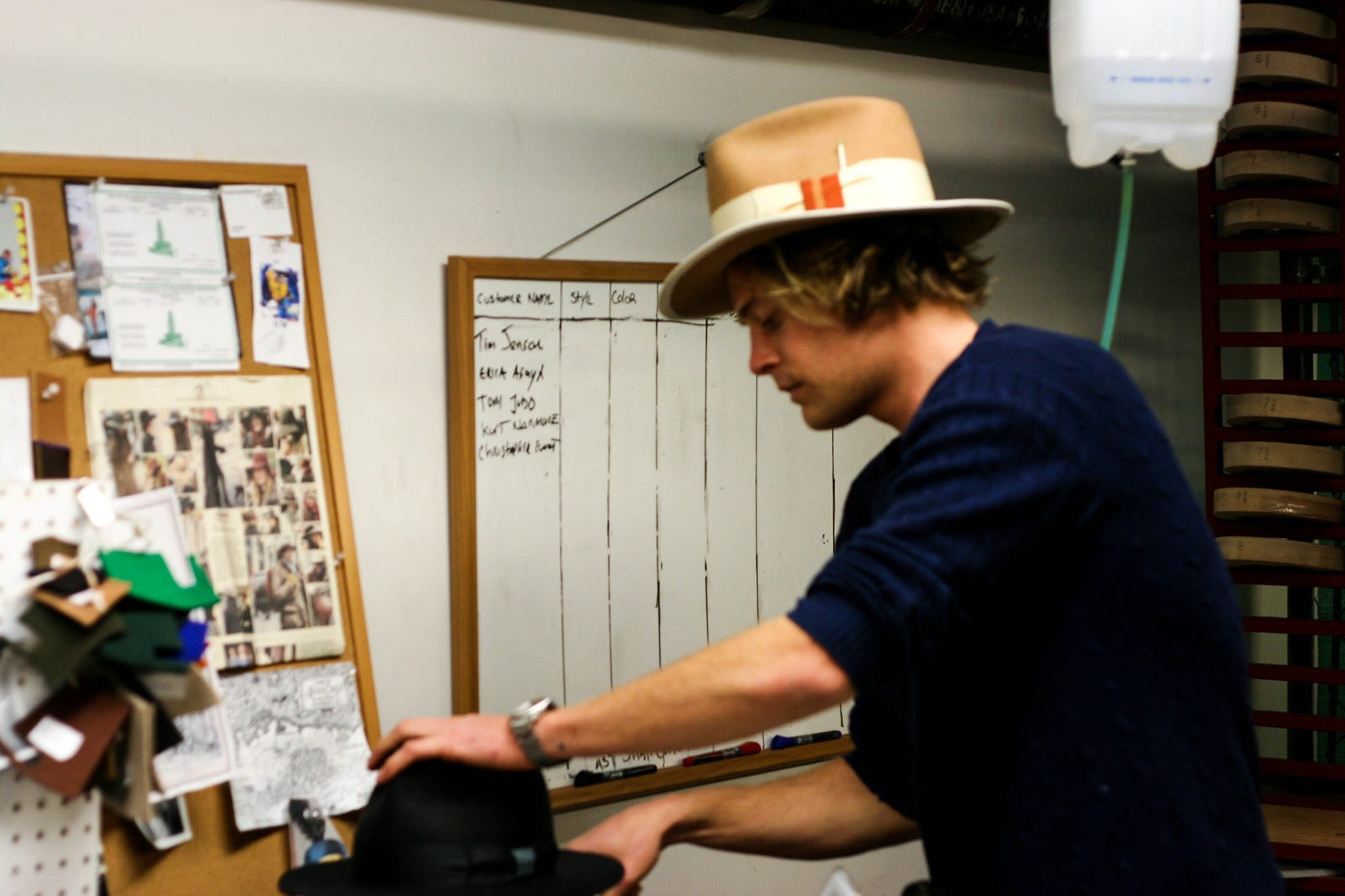
One afternoon in 2013, while covering The Stronghold on Abbot Kinney, I wandered into a chain-link-fenced-in parking space in an underground lot beneath a gym and met an apprentice hat maker named Nick Fouquet.
Weather Advisory
Early Spring
The first real shift in the season is beginning to show itself.
This will be a good week to sharpen tools, mend fences, clear work surfaces, and take inventory of the small things that support your work. Preparation rarely looks dramatic in the moment, but it tends to reveal its value once the season gets moving.
On the Workbench This Week: Lately I’ve been thinking about the role iteration plays in creative work — not just the revision of ideas, but the long chain of attempts that often precede the one that finally works.
Monday, exclusively for subscribers to The Workbench, I’ll share the story of Gigi’s, a restaurant concept I developed for a Kansas City hotel, an effort that ultimately failed to see daylight but one which taught me more about the creative process than success would have.